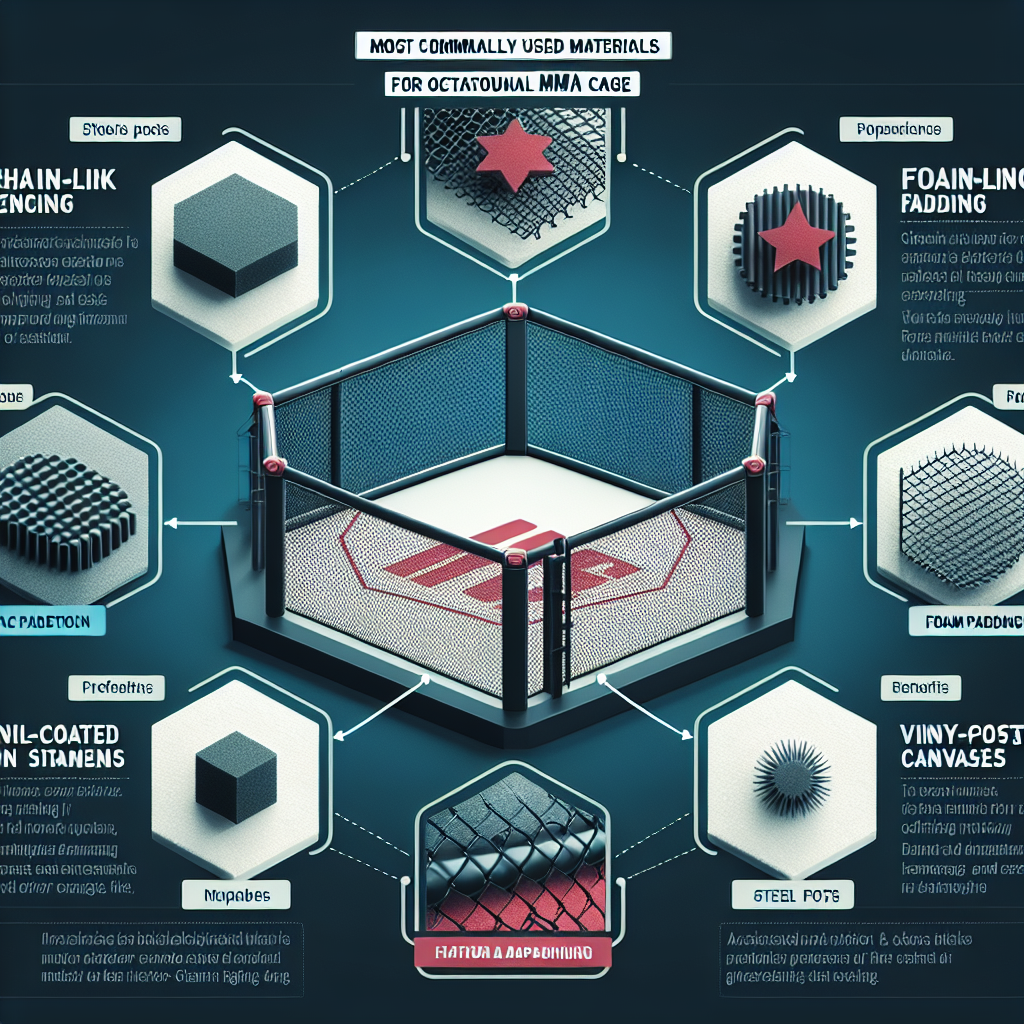
Steel: Strength and Durability
When it comes to designing octagonal cages for MMA fights, the choice of materials is crucial to guarantee the safety of the fighters, the durability of the structure and compliance with regulatory standards. Among the most commonly used materials, steel occupies a central position due to its exceptional strength and durability properties. Widely recognized for its strength, this material plays a fundamental role in cage construction, where safety and reliability are top priorities.
Steel is particularly prized for its ability to withstand high forces without deforming. In the context of MMA fights, where violent impacts against the cage walls are frequent, this characteristic is essential. Whether they're being thrown against the grids, or leaning on them to try to free themselves from a hold, fighters need to be able to rely on a solid, stable structure. Thanks to its high mechanical strength, steel ensures that the cage remains intact even under extreme stress, minimizing the risk of accidents due to structural failure.
What's more, steel is a durable material that stands up well to wear and the passage of time. MMA cages are subjected to demanding conditions, including repeated shocks, temperature variations and exposure to moisture due to fighter perspiration or regular cleaning. When properly treated, steel can resist corrosion and retain its mechanical properties over long periods. This makes it an economical choice for event promoters and gym owners, as a well-maintained steel cage can last for many years without the need for major repairs or replacement.
Another notable advantage of steel is its versatility in cage design. It can be fashioned into different shapes and sizes to meet the exact specifications of competitions or training facilities. Steel grids, for example, are often vinyl or powder-coated to improve aesthetics and provide a smoother surface, reducing the risk of injury to fighters. Steel can also be combined with other materials, such as wood or plastic, to create hybrid structures that combine strength and comfort.
However, the use of steel is not limited to its physical properties. This material is also appreciated for its ability to meet the strict safety standards imposed by MMA organizations. Cages must be designed to protect not only the fighters, but also the spectators and officials present around the sparring area. Steel, as a reliable and proven material, can be used to build structures that meet these requirements, providing a safe environment for all participants.
In short, steel is the obvious choice for the manufacture of octagonal MMA cages, thanks to its strength, durability and versatility. These qualities make it an ideal material for meeting the rigorous demands of this sport, where safety and performance go hand in hand. Thanks to its unique properties, steel continues to play a central role in the evolution of infrastructures dedicated to mixed martial arts, guaranteeing fights that are both spectacular and safe.
Steel mesh: safety and visibility
Steel mesh is one of the most commonly used materials for the construction of octagonal cages in mixed martial arts (MMA). This choice is not insignificant, as it meets strict requirements in terms of safety, durability and functionality. Indeed, MMA cages must not only guarantee protection for the fighters, but also offer optimum visibility for spectators and officials. Thanks to its unique properties, steel mesh is the ideal solution to meet these needs.
One of the main advantages of steel mesh is its robustness. MMA fights are intense, involving rapid movements, violent impacts and projections against the cage walls. In this context, it is essential that the structure can withstand these stresses without deforming or compromising the safety of the athletes. Steel, known for its strength and wear resistance, offers exceptional durability, even under repeated use. What's more, steel mesh is designed to absorb shock while maintaining its structural integrity, reducing the risk of serious injury in the event of direct contact with the wall.
At the same time, steel mesh plays a crucial role in visibility, a fundamental aspect for MMA events. Unlike other materials that might obstruct the view, the mesh's lattice design allows clear, unobstructed observation of the action inside the cage. This is particularly important for spectators, whether they are present on site or following the fight via TV broadcasts. The cameras can capture every movement without interference, guaranteeing an immersive experience for the audience. What's more, officials such as referees and judges also benefit from this increased visibility, enabling them to make precise, informed decisions during the fight.
Another notable advantage of steel mesh is its ability to be covered with a protective coating, usually vinyl or powder. This coating serves to prevent corrosion, thus prolonging the cage's service life, even in environments subject to humidity or temperature variations. It also contributes to fighter safety by reducing the risk of cuts or scratches caused by direct contact with the raw metal. This attention to detail reflects the importance attached to protecting athletes while maintaining the cage's aesthetic and functional standards.
Finally, steel mesh is relatively easy to maintain, making it a practical choice for event organizers. Regular cleaning is usually all that's needed to maintain its appearance and performance, which is essential to ensure a professional presentation at competitions. This combination of safety, visibility and durability makes steel mesh an essential material for octagonal MMA cages, meeting the expectations of fighters, officials and the public alike.
Aluminium: Lightweight and easy to install
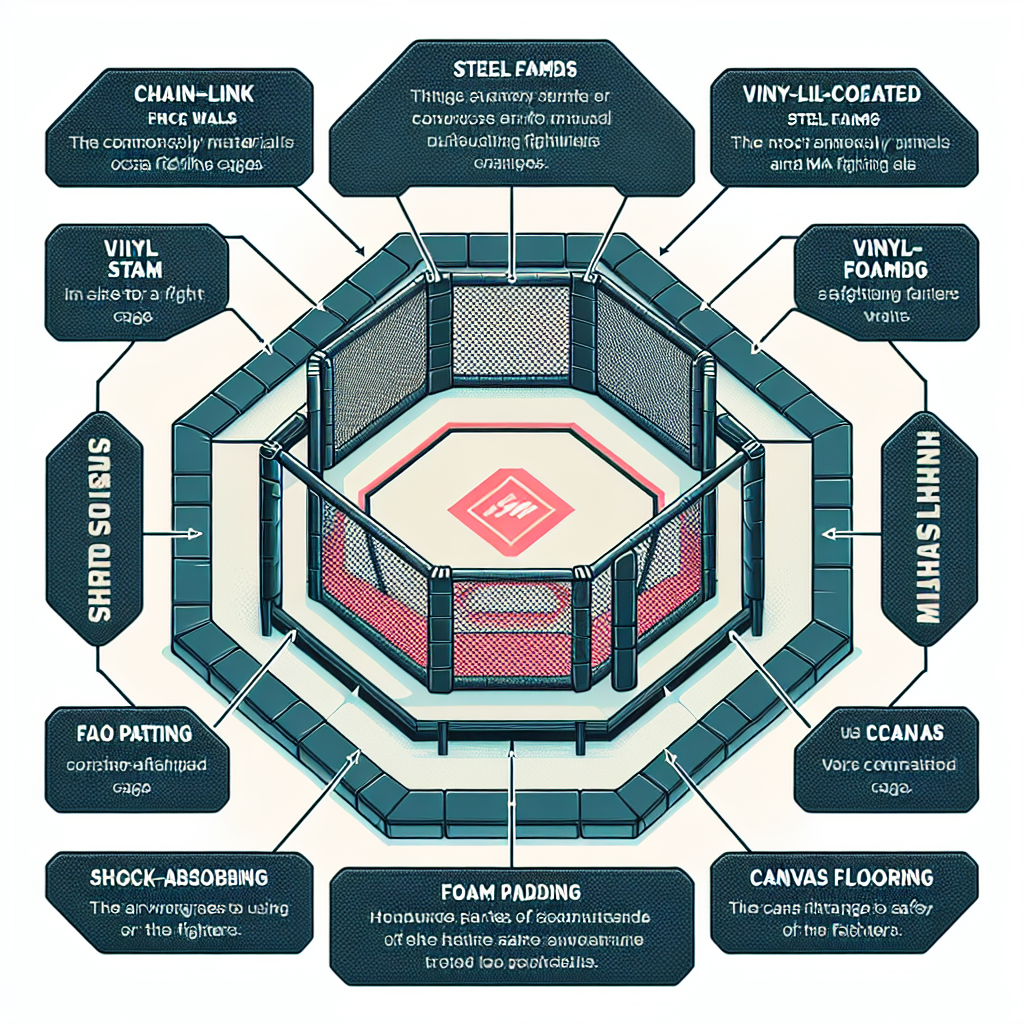
Aluminum is one of the most popular materials for the construction of octagonal cages used in MMA competitions, and for many reasons. Its popularity rests mainly on its lightness, durability and ease of installation, characteristics that make it a preferred choice for event organizers and manufacturers alike. Indeed, in a field where fighter safety and logistical practicality are top priorities, aluminum is the ideal solution.
One of the main advantages of aluminum is its lightness. Compared to other materials such as steel, it is much easier to handle, which greatly simplifies transport and installation of the cages. This is particularly important for travelling events, where structures need to be assembled and dismantled quickly and efficiently. Aluminum's light weight also helps reduce transportation costs, a significant advantage for organizations looking to optimize their budget. What's more, this property in no way detracts from the structure's solidity, as aluminum is strong enough to withstand the repeated impacts and physical stresses inherent in MMA fighting.
What's more, aluminum offers excellent corrosion resistance. Unlike steel, which can rust when exposed to moisture or adverse climatic conditions, aluminum retains its structural integrity and appearance over time. This durability makes it a wise choice for cages used outdoors or in environments where humidity is a factor. As a result, aluminum cages require less maintenance, saving time and money for event organizers.
Ease of installation is another major advantage of aluminum. Thanks to its lightness and malleability, this material can be used to design modular structures that can be assembled quickly and without excessive effort. This is particularly advantageous for technical teams, who can then concentrate on other logistical aspects of the event. What's more, aluminum cages are often designed to be demountable, making them easy to store and reuse for future events. This modularity also helps to reduce the ecological footprint of organizations, an aspect increasingly valued in the world of sport.
Last but not least, aluminum is a recyclable material, making it an environmentally-friendly option. In a context where sustainability and ecological responsibility have become major concerns, the choice of aluminum for MMA cages reflects a desire to combine performance and respect for the planet. This eco-responsible dimension can also reinforce the image of organizations with the public and sponsors, who are increasingly sensitive to these issues.
All in all, aluminum stands out as the material of choice for octagonal MMA cages, thanks to its lightness, durability, corrosion resistance and ease of installation. These qualities make it a practical and reliable solution, meeting the technical and logistical requirements of modern competitions. What's more, its recyclability and environmental-friendliness add a further dimension to its many advantages, consolidating its place as one of the most widely used materials in this field.
PVC: Low cost and easy maintenance
The choice of materials for the construction of the octagonal cages used in MMA fights is a crucial aspect that influences not only the durability of the structure, but also the safety of the fighters and the overall experience of the spectators. Among the most commonly used materials, PVC stands out for its many advantages, including low cost and ease of maintenance. These characteristics make it a popular option, particularly for facilities on a limited budget or for organizations looking to optimize their resources without compromising quality.
PVC, or polyvinyl chloride, is a synthetic material widely used in various industries due to its versatility and affordability. In the context of MMA cages, it is often used for exterior cladding, pole protection or sheathing over metal cables. One of PVC's main advantages is its lower cost compared with other materials such as stainless steel or aluminum. This makes it an ideal solution for emerging organizations or training facilities wishing to invest in a functional cage without incurring excessive expense. What's more, PVC is readily available on the market, simplifying sourcing and reducing manufacturing lead times.
As well as being economical, PVC is also appreciated for its ease of maintenance. Unlike some materials that require special treatment or regular maintenance to prevent corrosion or wear, PVC is naturally resistant to moisture, stains and most chemicals. This property is particularly advantageous in an environment like that of MMA fights, where sweat, blood and other substances can quickly soil surfaces. Simple cleaning with water and a mild detergent is usually enough to keep the PVC in good condition, reducing the time and effort required for cage maintenance. This ease of maintenance also helps to extend the material's lifespan, reinforcing its economic appeal.
In addition to its resistance to the elements, PVC offers a certain flexibility that can be beneficial to the safety of combatants. For example, when used to cover wire ropes or poles, it acts as a protective layer that reduces the risk of injury in the event of direct contact. Although PVC is not as robust as other materials such as rubber or leather, it offers a good compromise between protection and cost. This flexibility also enables the material to be adapted to different cage configurations, making its use even more versatile.
However, it's important to note that PVC is not without its limitations. Its durability, while sufficient for many applications, may be inferior to that of more expensive materials, especially in environments subject to intensive use. What's more, although PVC is resistant to moisture, prolonged exposure to extreme temperatures or UV rays can lead to gradual degradation of the material. These drawbacks need to be taken into account when selecting materials for an MMA cage, depending on specific requirements and conditions of use.
In conclusion, PVC is the material of choice for octagonal MMA cages, thanks to its low cost, ease of maintenance and versatility. Although it has certain limitations, its advantages make it an attractive option for organizations seeking to combine functionality and economy. By carefully weighing up the pros and cons, promoters and manufacturers can take advantage of PVC's unique properties to design cages that meet the demands of the sport while staying within budgetary constraints.
Vinyl Cladding: Protection and Aesthetics
Vinyl cladding is an essential element in the design of the octagonal cages used for MMA fights, playing a crucial role both functionally and aesthetically. This material, often overlooked by the general public, is nevertheless at the heart of the safety and appearance of the structures that host these intense confrontations. Indeed, vinyl is chosen for its unique properties, which meet the strict requirements of this contact sport, where robustness and protection of the combatants are paramount.
One of the main reasons why vinyl is preferred as a covering is its ability to provide a smooth, uniform surface. Unlike other materials which may have roughness or irregularities, vinyl guarantees a homogeneous finish, reducing the risk of surface injuries caused by friction or impact against the cage walls. This feature is particularly important in a sport where fast movements and violent impacts are frequent. What's more, vinyl is often applied over a layer of padding, which adds extra protection by cushioning shocks when fighters come into contact with the walls.
In addition to its protective qualities, vinyl also stands out for its durability. The material is designed to withstand intense wear and tear, making it an ideal choice for MMA cages that undergo repeated stress during training and competition. Its resistance to tearing and puncturing ensures that the cage retains its structural integrity even after numerous fights. What's more, vinyl is relatively easy to maintain, helping to extend its lifespan. Regular cleaning is all that's needed to remove sweat, blood or any other residue, ensuring optimum hygiene and a well-groomed appearance.
Speaking of appearance, vinyl also plays a key role in the aesthetics of octagonal cages. Available in a wide range of colors and finishes, it enables the visual appearance of the cage to be customized according to the preferences of organizers or sponsors. This aesthetic flexibility is particularly appreciated at professional events, where brand image and visual impact are strategic elements. Vinyl can also be printed with specific logos or patterns, reinforcing the visual identity of the event or organization.
Finally, it's worth pointing out that vinyl is a relatively affordable material compared to other options available on the market. Its reasonable cost, combined with its many advantages, makes it an economical choice for developers and manufacturers of MMA cages. This affordability makes it possible to maintain high standards of quality and safety without burdening budgets.
All in all, vinyl cladding is the obvious choice for octagonal MMA cages, combining protection, durability, aesthetics and cost-effectiveness. Its ability to meet the specific requirements of this sport makes it a benchmark material, guaranteeing both the safety of fighters and the professional presentation of infrastructures.
 English
  French
  Spanish