
Evolution of materials: Technological advances in MMA cages
Mixed martial arts (MMA) have grown exponentially in recent decades, both in popularity and professionalism. This evolution has been accompanied by increased attention to fighter safety, spectator experience and equipment durability. Among the essential elements of this sport, the cage, which delimits the fighting area, has been the subject of notable innovations, particularly in terms of the materials used in its design. These technological advances have improved not only the performance of the infrastructure, but also the safety and comfort of the athletes.
Originally, MMA cages were often made from rudimentary materials, such as standard steel frames and basic wire mesh. Although these structures served their basic purpose, they had major drawbacks, including increased risk of injury to the fighters. Wire mesh, for example, could cause abrasions or cuts in the event of prolonged contact. In addition, steel frames, though sturdy, sometimes lacked flexibility, increasing the risk of violent impacts. These limitations soon prompted organizers and manufacturers to look for more suitable alternatives.
As technology and safety standards have evolved, so have the materials used in cage manufacture. Stainless steel, for example, has become a preferred choice for frames due to its corrosion resistance and enhanced durability. This material offers a solid structure while reducing the risk of degradation over time, even in environments subject to high humidity or variable climatic conditions. At the same time, traditional wire mesh has been replaced by mesh coated with vinyl or special polymers. These coatings minimize the risk of skin injuries while maintaining optimum visibility for spectators and judges.
In addition, the incorporation of shock-absorbing materials has marked a significant advance in cage design. High-density foam padding, often covered with synthetic leather or vinyl, is now used to protect the posts and edges of the cage. These additions considerably reduce the impact of collisions, providing an extra layer of safety for the fighters. In addition, the floor mats, which play a crucial role in preventing injuries from throws or falls, have also benefited from significant improvements. Modern materials, such as memory foam or multi-layer composites, offer an optimum balance between shock absorption and stability for athletes' movements.
Innovations in materials are not limited to safety. They also aim to enhance the overall experience of MMA events. For example, anti-reflective coatings applied to fencing prevent glare from floodlights, guaranteeing better visibility for spectators on site and for broadcast cameras. In addition, the use of lightweight yet sturdy materials facilitates transport and installation of the cages, a major asset for organizations staging events in different locations.
In short, the evolution of materials used in MMA cages reflects a constant drive to improve safety, durability and the overall experience of the sport. These advances demonstrate the industry's commitment to meeting the needs of fighters while adapting to the growing demands of spectators and broadcasters. As technologies continue to advance, it is likely that new innovations will further transform this central element of mixed martial arts.
Safety and Durability: New Materials Revolutionize Fighter Cages
MMA cages, emblematic of this fast-growing sport, have evolved over the years to meet increasing safety and durability requirements. These structures, which delimit the sparring area, play a crucial role in protecting athletes while guaranteeing an optimal experience for spectators. With the rise of modern technology and increased attention to fighter safety, the materials used to build these cages have undergone significant advances. These innovations are not limited to aesthetics or functionality, but also aim to meet the strict standards imposed by sports organizations and regulators.
One of the most notable aspects of this evolution is the use of stronger, lighter materials for metal cage structures. Traditionally made from steel, modern cages now incorporate advanced alloys such as reinforced aluminum or metal composites. These materials offer equivalent or even greater strength than steel, while reducing the overall weight of the structure. This lightness not only facilitates transport and installation of the cages at events, but also contributes to better shock absorption, reducing the risk of serious injury to combatants. What's more, these alloys are often treated to resist corrosion, guaranteeing enhanced durability even in environments subject to high humidity or variable climatic conditions.
At the same time, the cage's surfaces, notably the mesh and coatings, have also benefited from notable innovations. Wire mesh, once made of crude steel, is now coated with special polymers that increase its resistance while minimizing the risk of abrasion for the fighters. These polymer coatings, often based on PVC or synthetic rubber, offer a smoother, less aggressive surface, reducing the risk of cuts or scratches during prolonged contact with the cage. What's more, these materials are designed to be non-toxic and hypoallergenic, responding to growing concerns about athletes' health and safety.
Another area of innovation concerns cage floor mats, which play an essential role in cushioning falls and impacts. Modern mats incorporate memory foam or multi-layer materials that combine flexibility and density. These technologies distribute the force of impacts evenly, reducing the risk of joint or cranial trauma. What's more, mat coverings are often made from antibacterial, easy-to-clean materials, ensuring optimum hygiene between bouts. This attention to cleanliness is particularly important in a sport where physical contact is frequent and the risk of skin infections is high.
Finally, environmental sustainability has become a key criterion in the choice of materials. Many MMA organizations are now adopting recyclable or sustainably sourced materials for the manufacture of cages. For example, some flooring and fencing incorporate recycled plastics, while metal structures are designed to be reused or easily dismantled at the end of their life. This eco-responsible approach reflects a growing awareness of the environmental impact of sporting events, and is part of a wider trend to make sport more sustainable.
In short, innovations in MMA cage materials reflect an ongoing commitment to athlete safety and equipment durability. Thanks to technological advances and increased attention to detail, these structures continue to evolve to meet the needs of an ever-changing sport. Progress in this area not only benefits the fighters, but also reinforces the credibility and professionalization of MMA on the international scene.
The Impact of Ecological Materials on MMA Cage Design
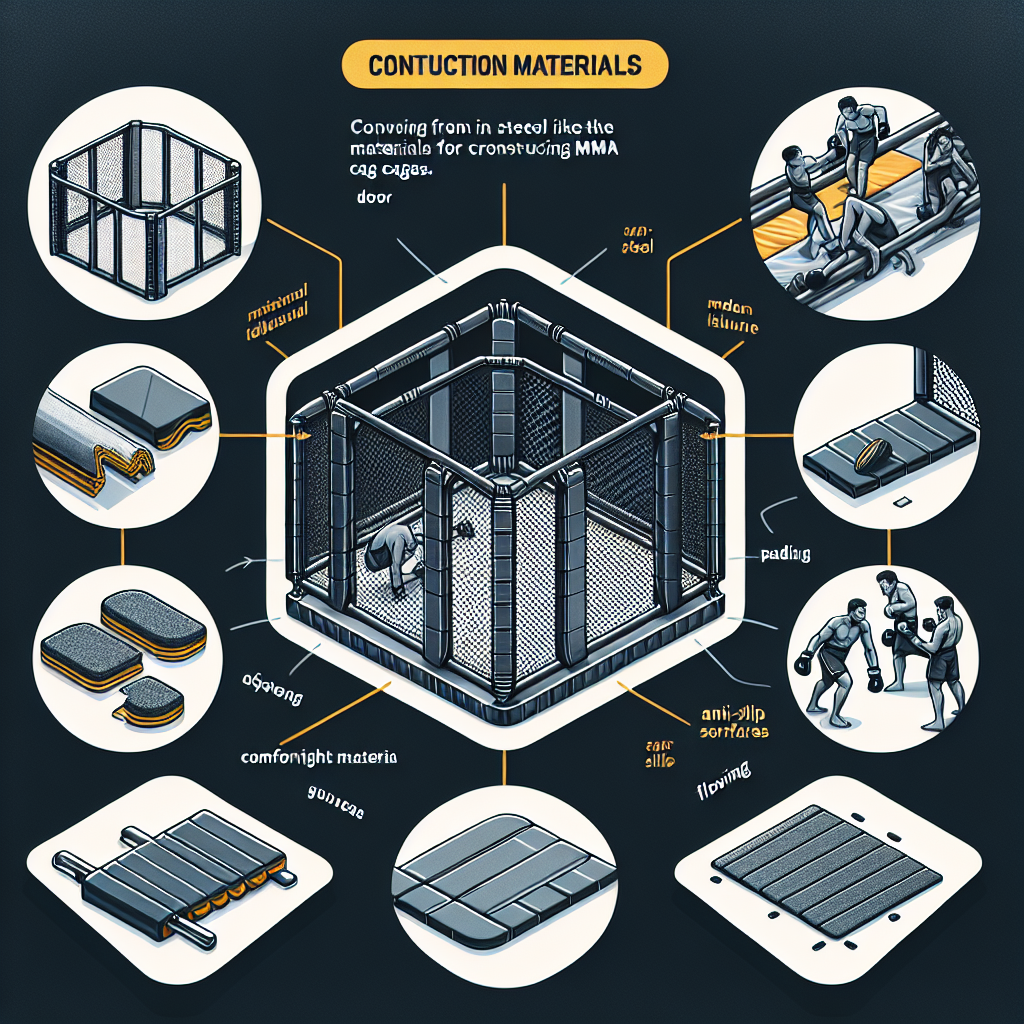
The materials used in the design of MMA cages have evolved considerably over the years, reflecting not only technological advances but also a growing awareness of environmental issues. The integration of environmentally-friendly materials in the manufacture of these structures has become a major topic of interest for both manufacturers and sports organizations. This transition to more sustainable solutions is not simply a trend, but part of a global approach aimed at reducing the industry's ecological footprint while guaranteeing the safety and performance of equipment.
The impact of environmentally-friendly materials on MMA cage design can be seen on several levels. Firstly, traditional materials such as steel and synthetic plastics, while effective in terms of strength and durability, pose significant environmental problems. Their production is energy-intensive and generates greenhouse gas emissions, while their end-of-life disposal contributes to the accumulation of non-biodegradable waste. In response to these challenges, manufacturers are exploring more environmentally-friendly alternatives, such as recycled alloys, biobased composites and biodegradable polymers. These materials offer comparable or even superior performance, while reducing overall environmental impact.
Moreover, the use of environmentally-friendly materials in MMA cages is not limited to the metal structure. Coatings, nets and foam protectors, which play a crucial role in fighter safety, are also concerned. For example, foams made from renewable raw materials, such as natural rubber or bioplastics, are gradually replacing synthetic foams derived from petroleum. Similarly, nets made from traditional synthetic fibers, which are often non-recyclable, are giving way to alternatives made from recycled or biodegradable fibers. These innovations make it possible to reduce the ecological footprint of cages while maintaining the safety and performance standards demanded by professional competitions.
However, the transition to environmentally-friendly materials in MMA cage design is not without its challenges. One of the main obstacles is production cost. Sustainable materials, while environmentally advantageous, can be more costly to produce and integrate into existing industrial processes. What's more, their adoption often requires adjustments in manufacturing methods, which can represent a significant initial investment for manufacturers. Despite these challenges, many companies are choosing to go down this path, aware of the long-term benefits for both the environment and their brand image.
Another aspect to consider is the perception of end-users, particularly fighters and event organizers. The latter need to be convinced that eco-friendly materials do not entail any compromise in terms of safety or performance. To address these concerns, rigorous testing and specific certifications are put in place to ensure that cages meet the highest standards. These efforts help to build stakeholder confidence and encourage wider adoption of these innovations.
Ultimately, the integration of environmentally-friendly materials into MMA cage design represents a significant step towards a more sustainable industry. Although challenges remain, progress to date demonstrates that it is possible to reconcile performance, safety and respect for the environment. As technologies evolve and awareness of environmental issues grows, it is likely that these materials will become the norm, transforming not only the way cages are made, but also the way the sport itself is perceived.
Nanotechnology and MMA: Towards Stronger, Lighter Cages
Advances in materials technology have transformed many sectors, and the world of mixed martial arts (MMA) is no exception. Among the most promising innovations, the application of nanotechnology to the design of MMA cages opens up new perspectives in terms of strength, lightness and safety. This discipline, based on intense and dynamic combat, requires equipment capable of withstanding considerable forces while guaranteeing the safety of athletes. It is in this context that nanomaterials, with their unique properties, are positioned as a revolutionary solution.
Nanotechnology, which involves manipulating matter on an atomic and molecular scale, makes it possible to create materials with exceptional mechanical and physical characteristics. In the case of MMA cages, this translates into the use of composites reinforced with nanoparticles, such as carbon nanotubes or nanofibers. Although these structures are microscopic, their tensile strength and rigidity are far superior to those of traditional materials. For example, carbon nanotubes are around 100 times stronger than steel, yet six times lighter. This combination of lightness and strength is particularly advantageous for MMA cages, as it reduces the overall weight of the structure without compromising its strength.
In addition to their mechanical strength, nanomaterials also offer improved durability. MMA cages are subjected to repeated stresses, from the impact of fighters to the forces exerted on grids and posts. Traditional materials, such as steel or aluminum, can warp or wear over time, requiring frequent repair or replacement. Nanocomposites, on the other hand, are designed to resist wear and corrosion, prolonging cage life. This increased durability represents not only an economic advantage for event organizers, but also a guarantee of safety for athletes.
Moreover, the integration of nanotechnology in MMA cages is not limited to strength and durability. It can also help improve other aspects, such as shock absorption. By incorporating specific nanoparticles into cage coatings or structures, it is possible to dissipate impact energy more effectively. This could reduce the risk of injury to fighters, particularly when colliding with cage walls. What's more, some nanomaterials possess natural antibacterial properties, which could limit the proliferation of germs and improve equipment hygiene, a crucial aspect in a sport where physical contact is omnipresent.
However, despite these undeniable advantages, the adoption of nanomaterials in MMA cages is not without its challenges. The cost of producing these materials remains high, which could slow down their widespread adoption. In addition, their implementation requires specialized knowledge and specific equipment, which could represent an obstacle for some manufacturers. Nevertheless, as research progresses and costs fall, it is likely that these technologies will become more accessible, paving the way for wider adoption in industry.
In conclusion, the application of nanotechnology in the design of MMA cages represents a major advance that could redefine standards of safety, durability and performance. Although challenges remain, the benefits offered by these innovative materials are undeniable and promise to transform the experience of fighters and spectators alike. As technology continues to evolve, it's likely that tomorrow's MMA cages will not only be stronger and lighter, but also safer and more durable, marking a new era for this growing sport.
Smart Materials: A Revolution for Modern Battle Cages
Advances in materials technology have transformed many sectors, and the world of mixed martial arts (MMA) is no exception. Among the most striking innovations, the integration of intelligent materials in the design of sparring cages represents a veritable revolution. These materials, with their adaptive and reactive properties, offer significant advantages in terms of safety, durability and performance, redefining industry standards.
One of the main characteristics of intelligent materials is their ability to react to external stimuli, such as pressure, temperature or vibration. In the context of MMA cages, this property translates into improved impact management. For example, certain intelligent polymers used in cage wall or floor coatings can absorb and redistribute the energy generated by impacts. This not only reduces the risk of serious injury to combatants, but also prolongs the life of the structures themselves. Indeed, traditional materials, although robust, tend to wear out quickly under the effect of repeated impacts, requiring frequent and costly repairs. Intelligent materials, on the other hand, offer a more durable and cost-effective solution.
At the same time, these innovations also enhance the experience of spectators and organizers. Cages equipped with sensors embedded in their intelligent materials can collect real-time data on the forces exerted during fights. This information, transmitted to analysis systems, can be used to enrich television broadcasts or provide coaches and referees with precise statistics. For example, it becomes possible to accurately measure the intensity of a blow or the pressure exerted during a hold, adding a scientific and educational dimension to the sport. This increased transparency helps to boost the credibility of competitions and attract a wider audience.
Another notable advantage of intelligent materials lies in their ability to adapt to environmental conditions. MMA cages, often subject to variations in temperature and humidity, can benefit from thermoregulating coatings that maintain an optimal surface for the fighters. This is particularly relevant for events held outdoors or in extreme climates, where conditions can affect athletes' performance. What's more, some smart materials possess antibacterial properties, helping to maintain a hygienic environment and reduce the risk of infection, a crucial aspect in a sport where physical contact is omnipresent.
Finally, the integration of these technologies into MMA cages is part of a broader approach to sustainability and respect for the environment. Many smart materials are designed to be recyclable or made from renewable resources, responding to a growing demand for eco-responsible solutions in the sports industry. This approach not only helps to reduce the ecological footprint of events, but also positions MMA as an innovative sport committed to contemporary issues.
In short, the use of intelligent materials in MMA cages marks an important step in the evolution of the sport. By combining safety, performance and durability, these innovations pave the way for a new era where technology and athletics come together to offer an enriched experience to all involved. As these materials continue to develop, it is likely that their adoption will become an unavoidable standard, redefining expectations and possibilities in the world of mixed martial arts.
 English
  French
  Spanish