
Choosing the right size and configuration for your professional MMA cage
When it comes to equipping a gym with a professional MMA cage, one of the most crucial aspects to consider is the size and configuration of the structure. These elements play a decisive role not only in the user experience, but also in safety, functionality and optimization of available space. To make an informed choice, it's essential to consider a number of factors, from the dimensions of your room to the nature of the activities planned in the cage.
First of all, it's important to assess the overall space of your gym. A professional MMA cage can occupy a considerable area, and it's imperative to ensure that it fits harmoniously into the environment without compromising traffic flow or the use of other equipment. Take precise measurements of the area where you plan to install the cage, and allow for the necessary margins to allow safe and easy access. Too large a cage in a confined space may not only restrict the movement of athletes, but also create unnecessary risks for spectators or other users of the venue.
Once you have a clear idea of the space available, it's time to think about the size of the cage itself. Professional MMA cages are available in a variety of sizes, from compact models for indoor training to larger structures designed for official competitions. If your gym is primarily intended for training, a smaller cage may suffice, while still offering a realistic and immersive experience. On the other hand, if you plan to organize events or competitions, it may be wise to invest in a regulation-sized cage, generally 9 to 10 meters in diameter, to meet official standards.
In addition to size, cage configuration is another aspect not to be overlooked. MMA cages can be circular or octagonal, each with its own advantages. Octagonal cages, for example, are emblematic of MMA and offer an optimized surface for sparring, while circular cages may be more suited to specific types of training. The choice between these two configurations will largely depend on your objectives and the preferences of your users. In addition, it's essential to consider materials and build quality. A well-built cage, with solid panels and non-slip flooring, guarantees not only the safety of the athletes, but also the durability of the equipment.
Finally, don't forget to consider the specific needs of your clientele. If your gym caters for professional fighters, they'll expect to train in a cage that reflects actual competition conditions. On the other hand, for a more generalist or amateur clientele, a simpler, more versatile cage may be sufficient. By taking these different elements into account, you'll be able to choose a professional MMA cage that perfectly meets the requirements of your gym, while providing an optimal experience for your users.
Essential Materials for a Durable and Safe MMA Cage
When it comes to equipping a gym with a professional MMA cage, the choice of materials is a crucial step in guaranteeing both the durability of the installation and the safety of users. A well-designed MMA cage must meet strict standards, not only to withstand the intensive wear and tear of training and sparring, but also to protect athletes from injury. So it's essential to understand the characteristics of the materials that make up an MMA cage and their role in the equipment's overall performance.
First of all, the cage structure is generally based on a sturdy steel frame. Steel is preferred for its strength and ability to withstand repeated impacts without deforming. It's important to choose high-quality steel, often galvanized or treated against corrosion, to guarantee a long service life, even in environments where humidity or sweat can accelerate wear. In addition, the thickness of the steel tubes must be sufficient to ensure optimum stability, particularly in combat situations where athletes can exert significant pressure on the walls.
Secondly, the wire mesh surrounding the cage plays a key role in the safety of the fighters. This mesh, also generally made of steel, is covered with a vinyl or plastic coating to prevent cuts or abrasions in the event of direct contact. This coating must be strong and securely attached to avoid rapid deterioration due to impact or rubbing. In addition, the mesh must be tight enough to prevent athletes' fingers or toes from getting caught in it, while offering optimum visibility for spectators and coaches.
The floor covering is another essential element to consider. A professional MMA cage must be equipped with a padded floor, designed to absorb shock and reduce the risk of injury from falls or projections. This padding usually consists of high-density foam covered with vinyl or PVC sheeting, which is both resistant and easy to clean. It's crucial to ensure that the covering is properly stretched and secured to avoid any risk of slippage or creases that could hinder combatants.
Finally, additional protection, such as padding around the posts and cage edges, is essential to maximize safety. These pads, often made of foam covered with synthetic leather, need to be thick enough to absorb impact, yet durable enough to withstand intensive use. They must be carefully installed to avoid any gaps or exposed areas that could present a hazard.
In short, the choice of materials for a professional MMA cage should be guided by criteria of robustness, safety and durability. By investing in quality materials and ensuring careful installation, you guarantee not only user satisfaction, but also the longevity of your equipment. Careful attention to these details will help create a safe, high-performance training environment that meets the expectations of athletes and coaches alike.
Essential accessories to complete your MMA cage
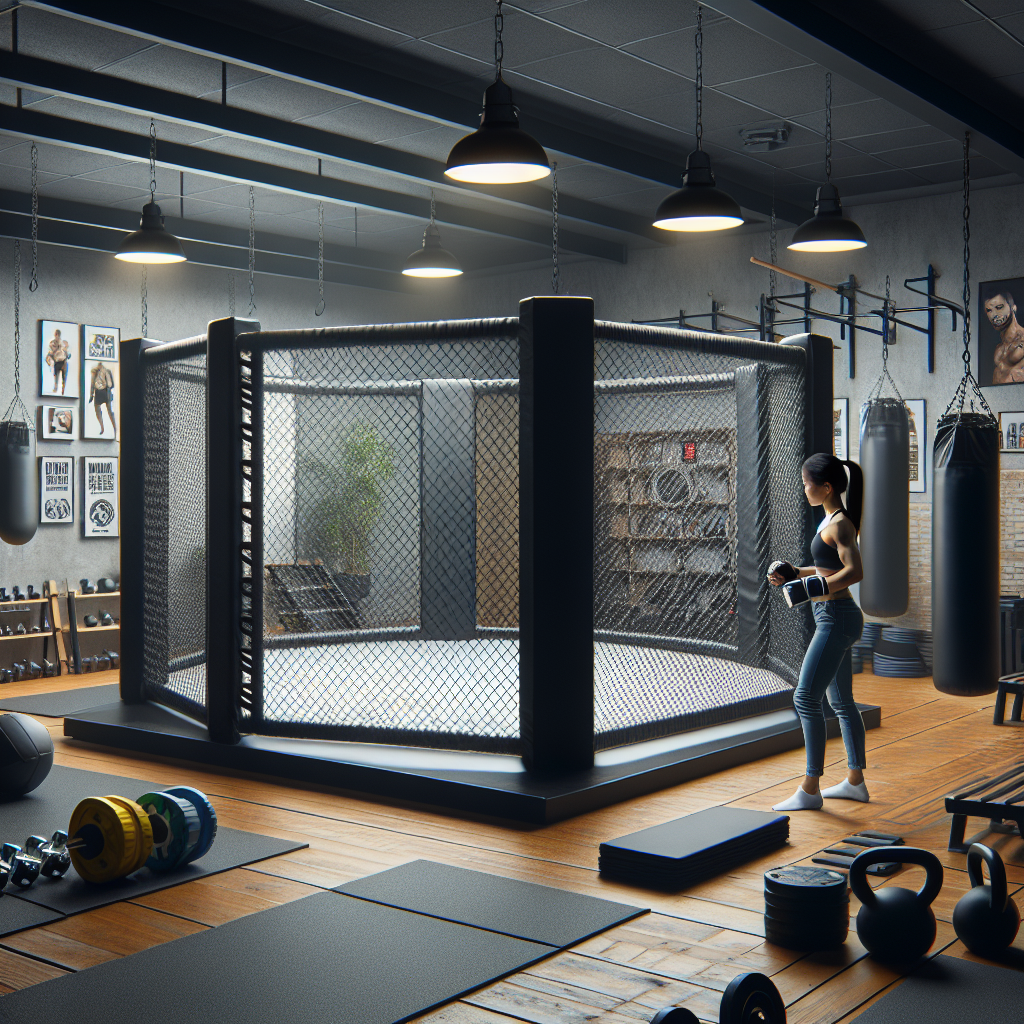
When investing in a professional MMA cage for your gym, it's essential to consider the accessories that will complement this central piece of equipment. These elements not only enhance the user experience, they also guarantee their safety, optimize their training and extend the durability of your facility. By choosing the right accessories, you can transform your MMA cage into a versatile and functional space, suitable for a variety of needs, from amateur training to professional competition.
First of all, it's crucial to ensure that the cage is equipped with high-quality floor mats. These mats, often made of dense vinyl-covered foam, provide a shock-absorbing surface that reduces the risk of injury in the event of a fall or splash. They need to be thick enough to absorb impact while offering optimum stability for fast movements. In addition, easy-to-clean and wear-resistant mats are recommended, as they will be subjected to intensive use. A clean, well-maintained surface contributes not only to the safety of athletes, but also to the overall hygiene of your gym.
In addition to the mats, wall protectors are another essential element. These pads, installed on the inside walls of the cage, serve to absorb shocks when fighters are thrown against the grids. They play a key role in injury prevention, particularly during intensive training or close combat. Wall guards must be made from robust, hard-wearing materials capable of withstanding repeated impacts without deteriorating. What's more, they must be carefully installed to ensure that they stay in place, even under heavy pressure.
In addition, it's a good idea to invest in specific training accessories to maximize the use of your MMA cage. For example, hanging punching bags or portable punching shields can be integrated to diversify exercises. This equipment enables athletes to work on their power, precision and endurance, while remaining in the safe environment of the cage. Similarly, resistance elastics or battle ropes can be added for muscle-strengthening and conditioning exercises. These tools offer great flexibility and can be adapted to suit different skill levels, making them ideal for gyms catering for exercisers from all walks of life.
Finally, safety and maintenance accessories should not be overlooked. Protective gloves, mouth guards and helmets should be provided to ensure that users train in optimal conditions. In addition, a well-stocked first-aid kit should always be available close to the cage in the event of an incident. As far as maintenance is concerned, specific cleaning products for mats and wall protectors are essential to maintain a hygienic environment and extend the life of your equipment.
In short, completing your MMA cage with the right accessories is an essential step in creating a safe, functional and attractive training space. By investing in quality floor mats, sturdy wall guards, a variety of training equipment and safety tools, you'll offer your users an optimal experience while protecting your investment in the long term. A thoughtful, proactive approach to choosing these items will help make your gym a benchmark for MMA enthusiasts and professionals alike.
Installation And Maintenance Tips For A Professional MMA Cage
Installing and maintaining a professional MMA cage in a gym requires careful planning and attention to detail. These steps are essential to guarantee the safety of users, maximize the durability of the equipment and provide an optimal experience for practitioners. Before beginning installation, it's crucial to choose a suitable location. The cage must be installed in a space large enough not only to allow its assembly, but also to provide a safe circulation area around it. Make sure that the ground is perfectly level and capable of supporting the weight of the structure, as an unstable base could compromise the safety and longevity of the equipment.
Once the location has been determined, it's important to follow the manufacturer's instructions carefully during assembly. Professional MMA cages are usually supplied with specific parts and tools for assembly. Take the time to check that all parts are present before you start, and make sure that each component is securely fastened. Mesh panels, posts and foam protectors must be correctly aligned and secured to avoid any risk of injury. If you're not sure about your installation skills, it may be a good idea to call in a professional or specialist team to ensure that assembly complies with safety standards.
Once the cage has been installed, regular maintenance becomes a priority to preserve its condition and ensure user safety. Start by frequently inspecting the various parts of the structure, including fasteners, welds and foam protectors. Screws and bolts can loosen over time due to repeated vibrations and impacts, so it's essential to retighten them periodically. Similarly, foam protectors and linings should be checked for signs of wear or tears. If any damage is found, replace the parts concerned immediately to avoid any risk of accident.
Regular cleaning is also a fundamental aspect of cage maintenance. Metal surfaces, screens and guards must be cleaned with suitable products to remove sweat, dust and bacteria. This not only helps maintain optimum hygiene, but also prevents corrosion and premature wear of materials. Be sure to use non-abrasive products to avoid damaging coatings and guards.
Finally, it's important to make users aware of the importance of respecting the cage's rules of use. Encourage them to report any problems or damage they may notice, and make sure they use the equipment properly to avoid accidents. A combination of careful installation, rigorous maintenance and responsible use will ensure that your professional MMA cage remains in excellent condition and continues to meet the needs of practitioners for many years to come.
Optimize Your Gym Space With A Versatile MMA Cage
When it comes to equipping a gym with a professional MMA cage, optimizing the available space is a key priority. An MMA cage is not only an imposing piece of equipment, but also a central element that can transform the user experience and enhance the reputation of your facility. To maximize its usefulness while ensuring harmonious integration into your space, it's crucial to consider a number of factors, from room configuration to the versatility of the cage itself.
First and foremost, it's important to assess the dimensions and layout of your gym. A careful analysis of the available space will enable you to determine the ideal location for the MMA cage. It's advisable to choose a location that doesn't interfere with other sporting activities while offering optimum visibility. For example, placing the cage in the center of the hall can not only attract the attention of visitors, but also create a focal point that enhances the overall facility. However, if space is limited, opting for a location in a corner or against a wall can be a practical solution, as long as sufficient room is left for the movements of both fighters and spectators.
Once the location has been defined, it's essential to select an MMA cage that matches the specific needs of your venue. Modular cages, for example, are particularly well suited to small or multi-functional spaces. These models enable the structure to be dismantled or reconfigured as required, offering invaluable flexibility. What's more, some cages feature removable panels or quick-release fastening systems, making them easy to install and dismantle. This versatility is a major asset for gyms staging various types of training sessions or events.
At the same time, you need to think about how you intend to use the MMA cage. If your gym mainly caters for professional fighters or serious amateurs, a regulation-sized cage made from robust materials will be essential. On the other hand, for fitness classes or recreational training, a smaller or simplified cage may suffice. In all cases, it's crucial to choose a model that complies with current safety standards, with adequate protection such as padding on the posts and strong nets.
Integrating an MMA cage into your gym involves more than just its physical installation. It's also important to consider the overall layout of the surrounding space. For example, clear circulation areas around the cage are essential to avoid clutter and ensure user safety. Similarly, adding storage for equipment such as gloves or mouth guards can help maintain a tidy, functional environment. Finally, lighting plays a key role in enhancing the cage. Well-designed lighting can not only improve visibility during training sessions, but also create a dynamic atmosphere that motivates athletes.
In conclusion, optimizing your gym space with a versatile MMA cage requires careful planning and attention to detail. By taking into account the dimensions of your gym, the needs of your users and the features of the cage, you can create an environment that is both functional and attractive. A well-integrated cage not only enhances the fighter's experience, it also reinforces your facility's professional image, attracting a diverse and loyal clientele.
 English
  French
  Spanish